How to Turn Your Darkest Hours into Your Finest Hours: An Introduction to the Art of Resilience
31/01/2018
31/01/2018
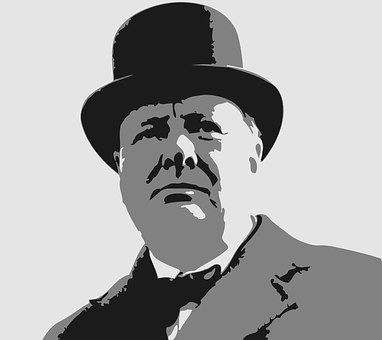
We all know what it is to face bad times. Whether it’s a change of circumstances in your professional life, company organisational change, a period of illness or a personal loss. Adversity can often strike when we least expect it. Even the smallest thing can then cause a setback and we can feel the heavy weight of the world on our shoulders. We are, after all, only human.
The recent release of the film about Winston Churchill, “The Darkest Hour,” explores the art of resilience in the dramatic setting of World War Two and at the point when Britain faced the very real threat of invasion. Churchill’s now legendary stoicism and oratory skills helped galvanise the British people into facing their own “darkest hour” (https://en.wikipedia.org/wiki/The_Darkest_Hour) and face down this threat.
So how do we learn the art of resilience and push through our own personal “darkest hour”? The art of picking yourself up and dusting yourself off after a challenging period can be difficult. Especially at work when you simply cannot afford to just step off or walk away. We need to know how to deal with this. Schools, universities, the sports world and many sectors of the business world from multinational pharmaceutical giants, sales teams in the retail industry to local doctor’s surgeries are placing resilience training programmes high up on their learning and development agenda.
class-e Training deliver “Personal Resilience” and “Resilience at Work” courses, most recently to healthcare employees working at a busy, over-stretched GP Practice. During the class-e “Resilience at Work” courses, we lead our delegates through a self-discovery of Resilience. The pro-gramme starts with looking at ‘what’ defines resilience and ‘who’ represents a resilient personality type. We explore ‘how’ resilient you are,‘how’ we learn to be more resilient and ‘why’ we need to develop our resilience.
The series of speeches that Churchill delivered in 1940 are a textbook example of resilience whilst facing the worst kind of adversity. Not only did he express the resolve to “never surrender” (https:// en.wikipedia.org/wiki/We_shall_fight_on_the_beaches) and to keep on fighting whatever may happen, he also realised that this period of impossible adversity may actually be the nation’s “finest hour.” (https://en.wikipedia.org/wiki/This_was_their_finest_hour).
Resilience development is exactly this. It is learning to turn your darkest hour into your finest. Adversity can be embraced as a vehicle for growth and development. Resilience is about perception and developing personal strategies for turning a glass half empty trauma into a glass half full opportunity.
In our increasingly challenging and fast changing world, Churchill’s survival message is loud and clear and universally relevant.The art of resilience, whether it is physical, mental or emotional, has moved upstage and is becoming an essential life skill.
In our next blog on Resilience, we have chosen ten of our favourite inspirational people and their quotes about resilience…
We have a range of different blogs posted, why not try one of these:

Stories connect us.. In ‘part 1’ of ‘Tell me a story’ we described how a narrative frame...
Read more >
10 Ways to keep your English going... The last few months have been weird by anyone’s stan...
Read more >
For all of us, life changed dramatically a couple of months ago when countries all over the world s...
Read more >
These are strange times. With our changed circumstances comes a new language: pandemi...
Read more >